A conversation to bridge the language gap and find my own meaning
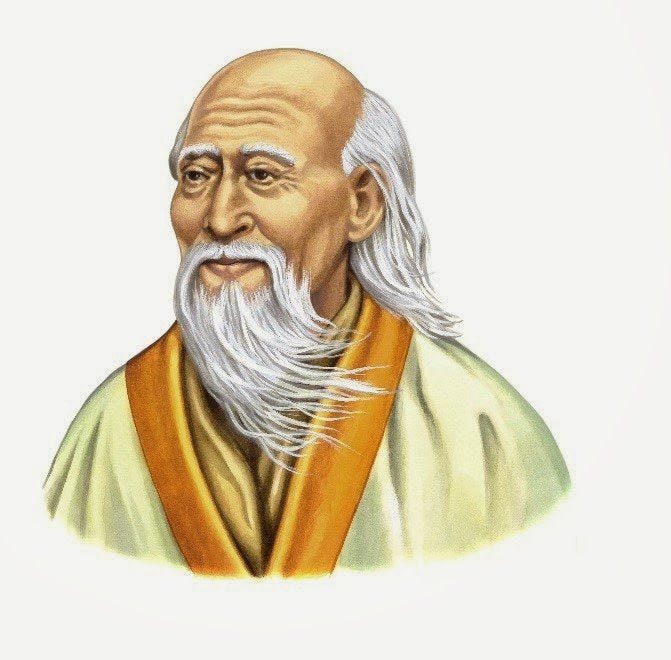
The Chinese language, with its emphasis on characters rather than an alphabet, offers a unique window into understanding reality.
Unlike Western languages, which often dissect and categorize the world into discrete units, Chinese “packs” meaning in a more holistic and interconnected way.
As a result, Chinese concepts often resist direct word-for-word translation, and their meanings unfold gradually, influenced by the cultural and philosophical context in which they are embedded.
So I prepared this exploration to provide a reference point for navigating the vast and profound landscape of Chinese thought, specifically within the realms of cosmology, Confucianism, and Taoism.
This summary reflects my personal interpretation of key concepts, refined through discussions in a Tao study group and several conversations of LLMs. These ideas are a starting point for a deep learning journey and are likely to evolve as I continue to explore, yet they currently provide a framework guiding me towards a fulfilling life. ✨
I. Chinese Cosmology
- Tian (天): Heaven, Cosmos. Embodies the natural order, destiny, and the source of morality in Confucianism.
- Yin Yang (阴阳): The dynamic and complementary interaction between opposing forces that govern the universe.
- Wu Xing (五行): The Five Elements (Wood, Fire, Earth, Metal, Water) symbolizing the basic forces and interactions in nature.
II. Confucianism
A. Fundamental Virtues (Five Constants)
- Ren (仁): Benevolence, Humanity, Compassion. The supreme virtue, representing altruistic love.
- Yi (義): Righteousness, Justice, Moral Duty. The ability to discern and act according to moral principles.
- Li (禮): Rituals, Etiquette, Propriety. The expression of respect, order and social harmony through customs and manners.
- Zhi (智): Wisdom, Knowledge, Understanding. Ethical discernment guided by reason and experience.
- Xin (信): Faith, Integrity, Honesty, Trustworthiness. The foundation of trust and reliability in relationships. Essential for social cohesion.
Additionally:
De (德): Virtue, Moral Power, Excellence. The embodiment of all cultivated virtues, radiating outward as a charismatic influence that inspires and motivates others towards righteousness and virtuous action through the power of example.
B. Other Essential Virtues
- Xiao (孝): Filial Piety. Respect and care for parents and ancestors, the basis of family values.
- Zhong (忠): Loyalty, Fidelity. Commitment to the common good and to social bonds.
- Yong (勇): Moral Courage. The strength to stand up for what is right, even in the face of adversity.
- Shan (善): Goodness, Kindness. The innate goodness present in human nature, to be cultivated.
C. Complementary Concepts
Confucian virtues manifest in practice through:
- Junzi (君子): The Noble Person. The ideal of a virtuous, wise, and cultured human being.
- Shu (恕): Empathy, Reciprocity. The Golden Rule: “Do not do unto others what you would not have them do unto you.”
- Wen (文): Culture, Arts, Education. The moral and spiritual refinement through the cultivation of culture and the arts.
III. Taoism
A. Fundamental Concepts
- Tao (道): The Way. The primordial principle of reality, omnipresent and beyond human purpose or reasoning.
- Zi Ran (自然): Inherent Spontaneity. Living in harmony with the self-organizing capacity, and effortless unfolding of the natural world.
- Pu (樸): Primal Simplicity, Natural State, Essence. A state of purity obtained by stripping away the layers of conditioning, ego, and societal constructs.
- Zhen (真): Authenticity, Truth, Sincerity. Living in accordance with one’s true nature.
- Wu Wei (無為): Non-Action, Effortless Action. Acting in harmony with the Dao, without attachment to results.
B. Virtues and Desirable States
- He (和): Harmony, Unity. The state of balance and inner peace achieved through living in accordance with the Dao.